Overview
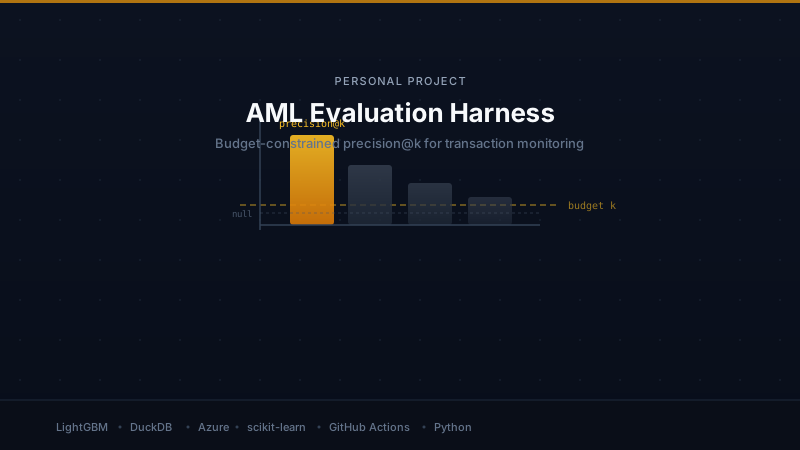
AML review teams operate under a hard daily constraint: they can only work through a fixed number of flagged alerts per day. Standard evaluation metrics like ROC-AUC don't capture this. The operative question is not "what is the AUC"; it is "of the accounts we can afford to look at today, how many are worth looking at?"
This harness answers that question with budget-aware evaluation primitives that are falsifiable. Every published metric comes with a random-ranker null, an attainable ceiling, a per-day budget-binding check, and content-addressed provenance, so any decimal can be traced to a specific run, a specific commit, and the data that produced it.
The core metric
The evaluation unit is an (account, calendar-day) pair under a daily alert budget k. Precision@k is the share of alerted accounts that are genuinely suspicious, which is the number that matters when your team can only work k cases today.
The harness computes three reference points alongside every model score:
Random-ranker null: Score from randomly selecting accounts — the floor any useful model must beat.
Attainable ceiling: Maximum achievable precision@k given the generator's prevalence on that day.
Budget-binding check: Whether k actually constrained the model. A pooled metric that averages across unbinding days overstates performance; the harness flags this.
Evaluation pipeline
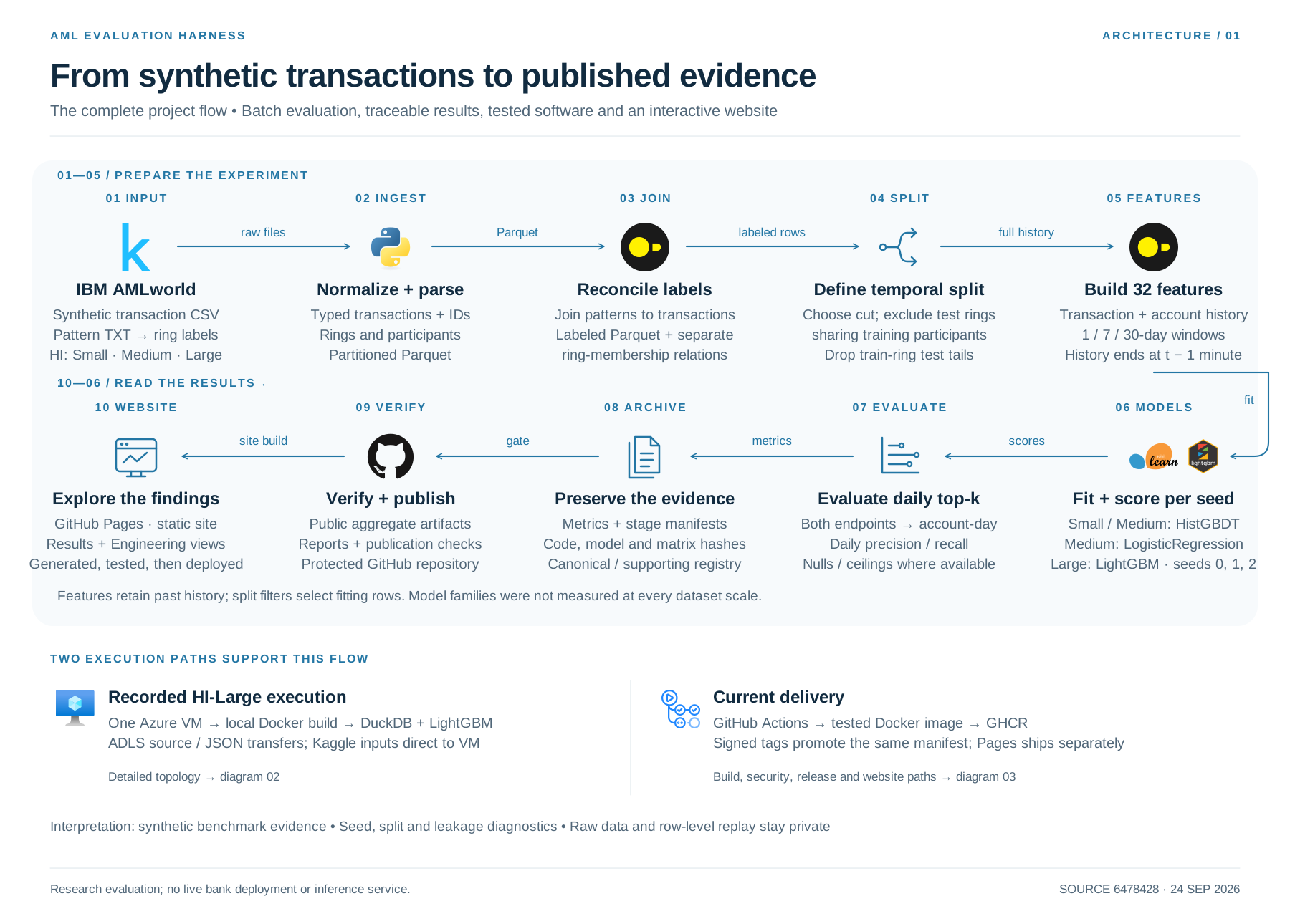
The pipeline runs from raw synthetic transactions through feature engineering, a ring-aware temporal train/test split with ring-participant disjointness, per-seed model fits, account-day budget metric computation, artifact archival, and a publication gate.
make release-check runs the full suite, then rejects any decimal not found in a committed artifact, any value from a superseded lineage, or any value the retraction registry has withdrawn. No number ships without a committed artifact backing it.
Azure execution (HI-Large run)
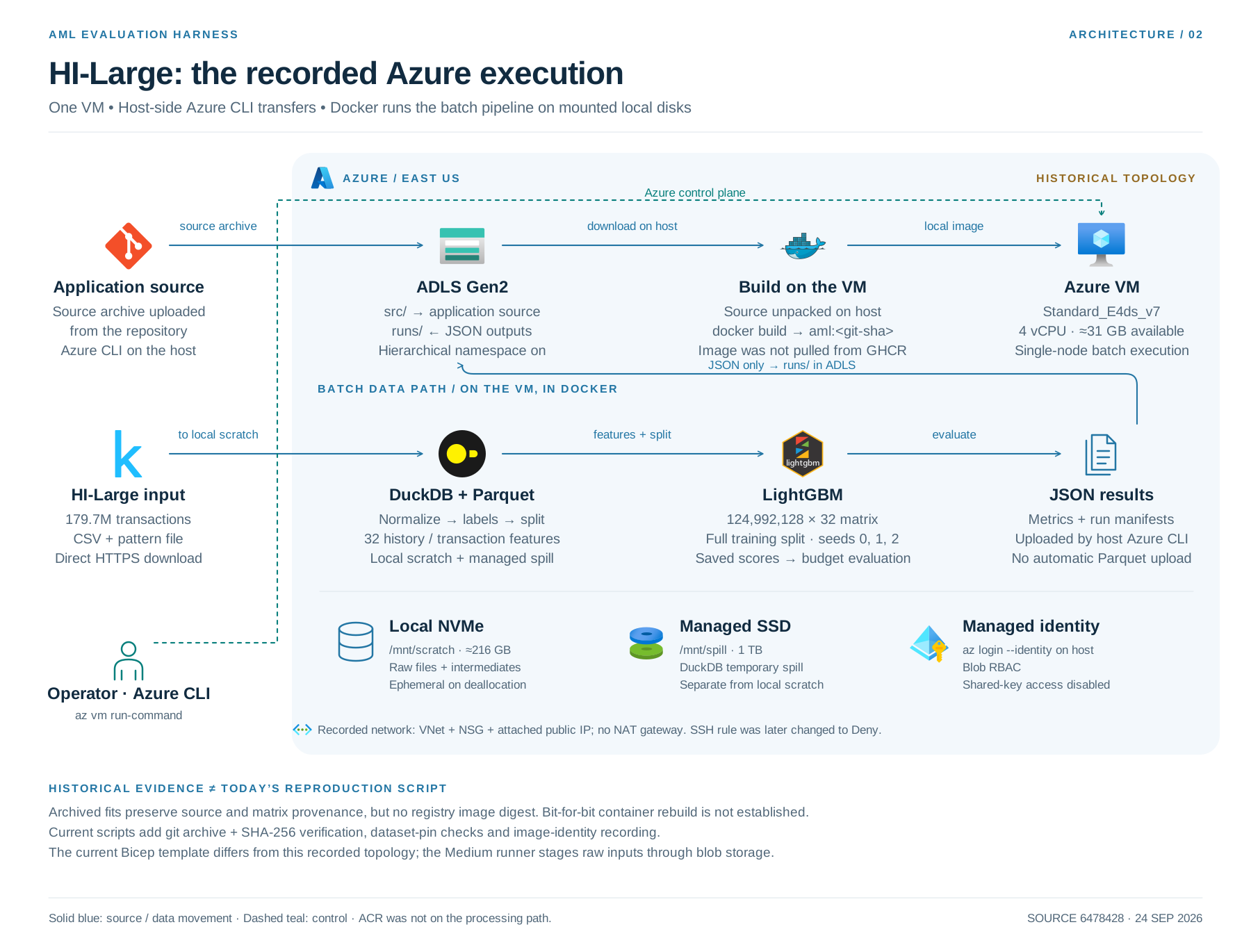
The 179M-transaction HI-Large run on Azure used a no-registry approach:
- Source code was git archived at a fixed commit and uploaded to ADLS Gen2
- The container was built on the VM itself, tagged aml:<git-sha>, with no image pulled from a registry
- Access used managed identity with no stored secrets and shared-key access disabled
- DuckDB handled spill disk within the VM
- Three seeds produced byte-identical training matrices
CI and release pipeline
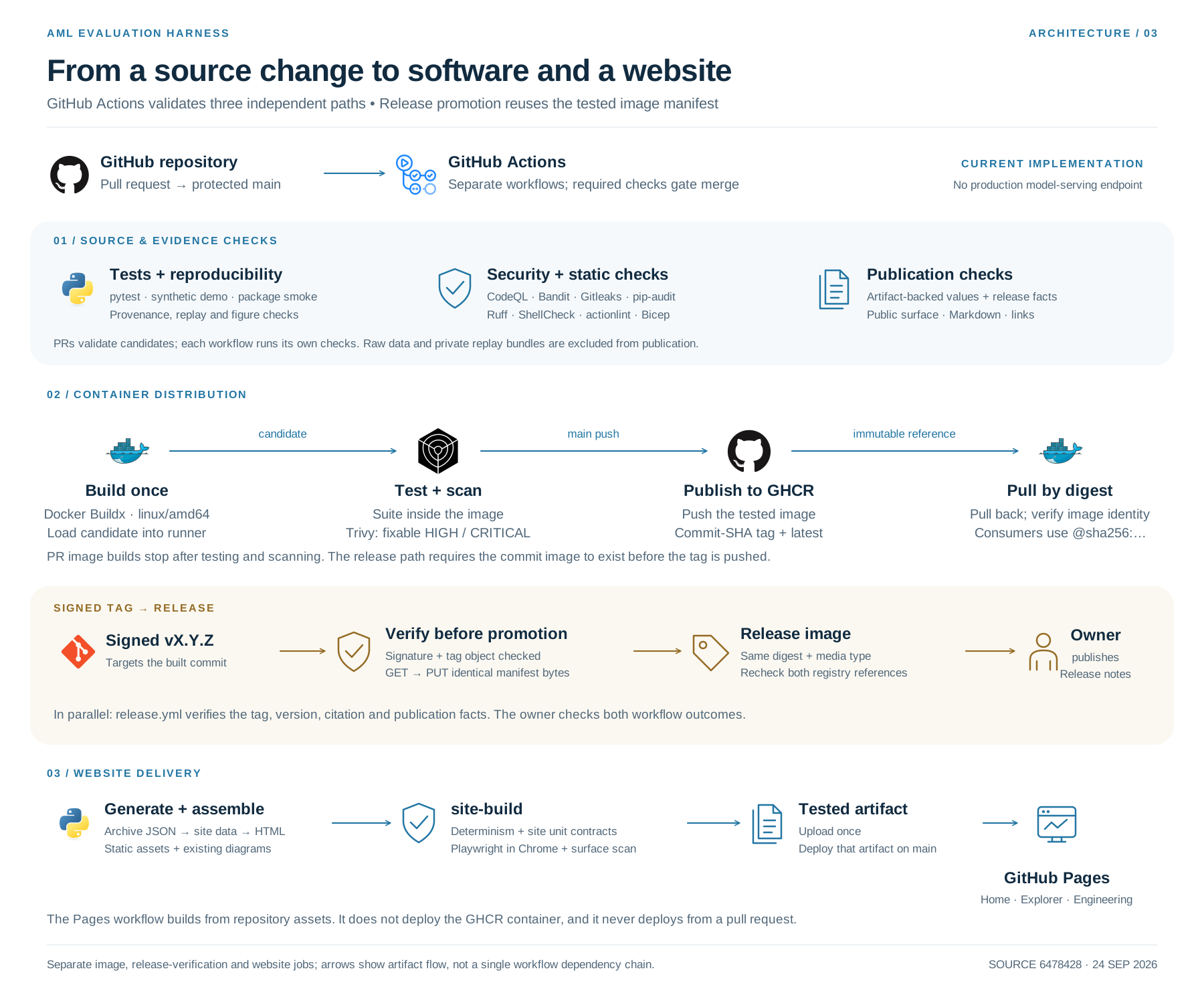
Container build, vulnerability scan, GHCR publish, and interactive website delivery all run through GitHub Actions. The release tag is the same manifest bytes as the tested commit tag, with no gap between what was tested and what ships.
Key findings
Three findings from one synthetic generator (not generalizable without further study):
Finding 1: Window composition dominates pooled metrics (HI-Medium). After the benchmark generator winds down at 2022-09-10, daily transaction volume drops from 3,021,866 to 7 and laundering prevalence jumps from 0.0008 to 0.4286. A random ranker already scores precision@50 between 0.45 and 0.49 on this window. A pooled budget metric here is mostly a statement about window composition.
Finding 2: On the volume segment, signal is real and small (HI-Medium, 7 active days). Random-ranker null: 0.00243 to 0.00244. Logistic model precision@50 = 0.04286, which is 17.6x the null. The ceiling is 409.8x, so there is headroom and the model uses a fraction of it.
Finding 3: Seed variance is large and localized to budget metrics. Across 8 seeds on HI-Medium, precision@50 spans 37.2% of its mean while ROC-AUC moves only 0.1%. Reporting a single-seed budget metric on this benchmark is not meaningful.
Scale and reproducibility
HI-Large transactions: 179,702,229
Training matrix (HI-Large): 124,992,128 x 32
LightGBM peak memory: 14.9 GB (scikit-learn equivalent needs 33.5 GB and overflows 31 GB)
Test assertions: 568 collected
Reproducibility tiers: Synthetic demo (no dataset needed) · Aggregate verification (every published figure traces to a committed artifact) · Full replay (requires licensed AMLworld CSVs)