Overview
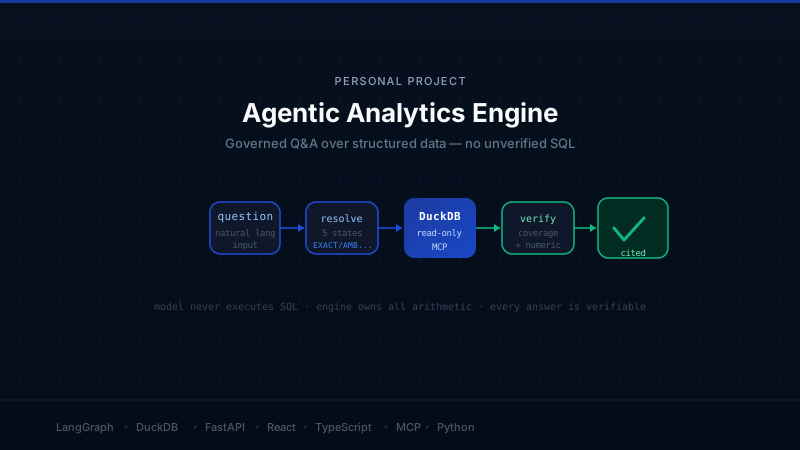
LLM-generated SQL and analytics can produce confident, incorrect numbers. The standard failure mode: the model computes something plausible-sounding, the user trusts it, and there is no way to check. This engine is built around a different contract; the model never executes SQL, never performs arithmetic, and never decides what gets published. Those responsibilities belong to a deterministic layer the model cannot reach.
Live demo: agentic-analytics-engine.onrender.com
How questions are resolved
Every incoming question passes through a rule resolver that returns one of five states:
EXACT: Resolved locally with no model call, directly to a typed contract.
AMBIGUOUS: Reaches the governed AI planner for exactly four resolvable issue types: unclear column role, competing measure candidates, competing dimension candidates, and an unbound filter.
UNRESOLVED: Engine cannot map the question to a measurable outcome.
UNSUPPORTED: Operation type not supported — for example, an unsupported statistical test.
UNSAFE: Question would require unsafe SQL or data access; refused immediately.
Most questions are EXACT or resolvable locally. Period ambiguity is excluded from the planner because a model cannot determine the business calendar from wording; the engine asks the user instead.
Full system architecture
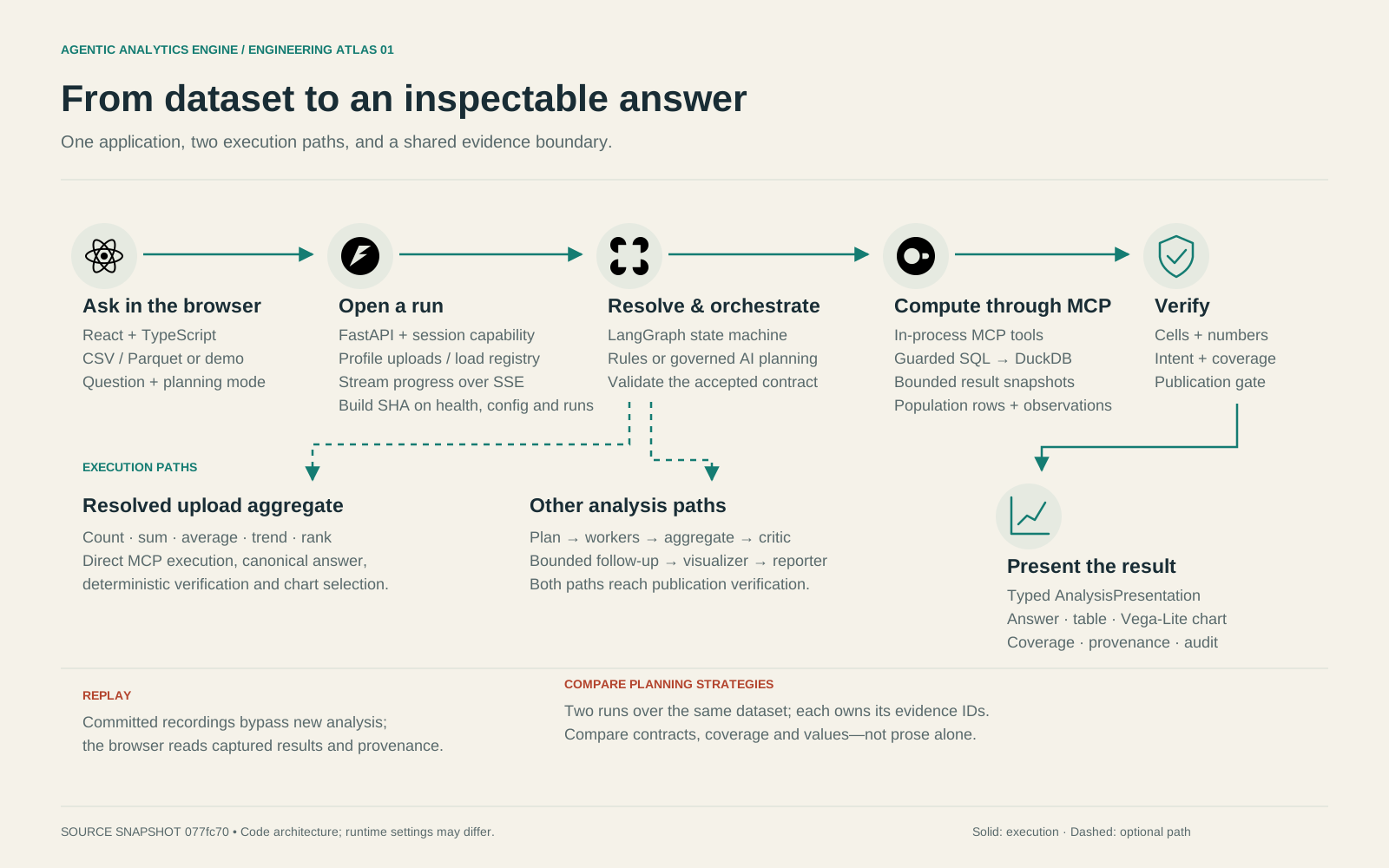
The engine owns the SQL, the read-only guard on DuckDB, the metric definitions, the statistics layer, the chart specification, and the arithmetic verification. A published answer requires cited cells, numeric support, evidence support, and question relevance. A breakdown is described as complete only where coverage was measured.
Governed AI planning
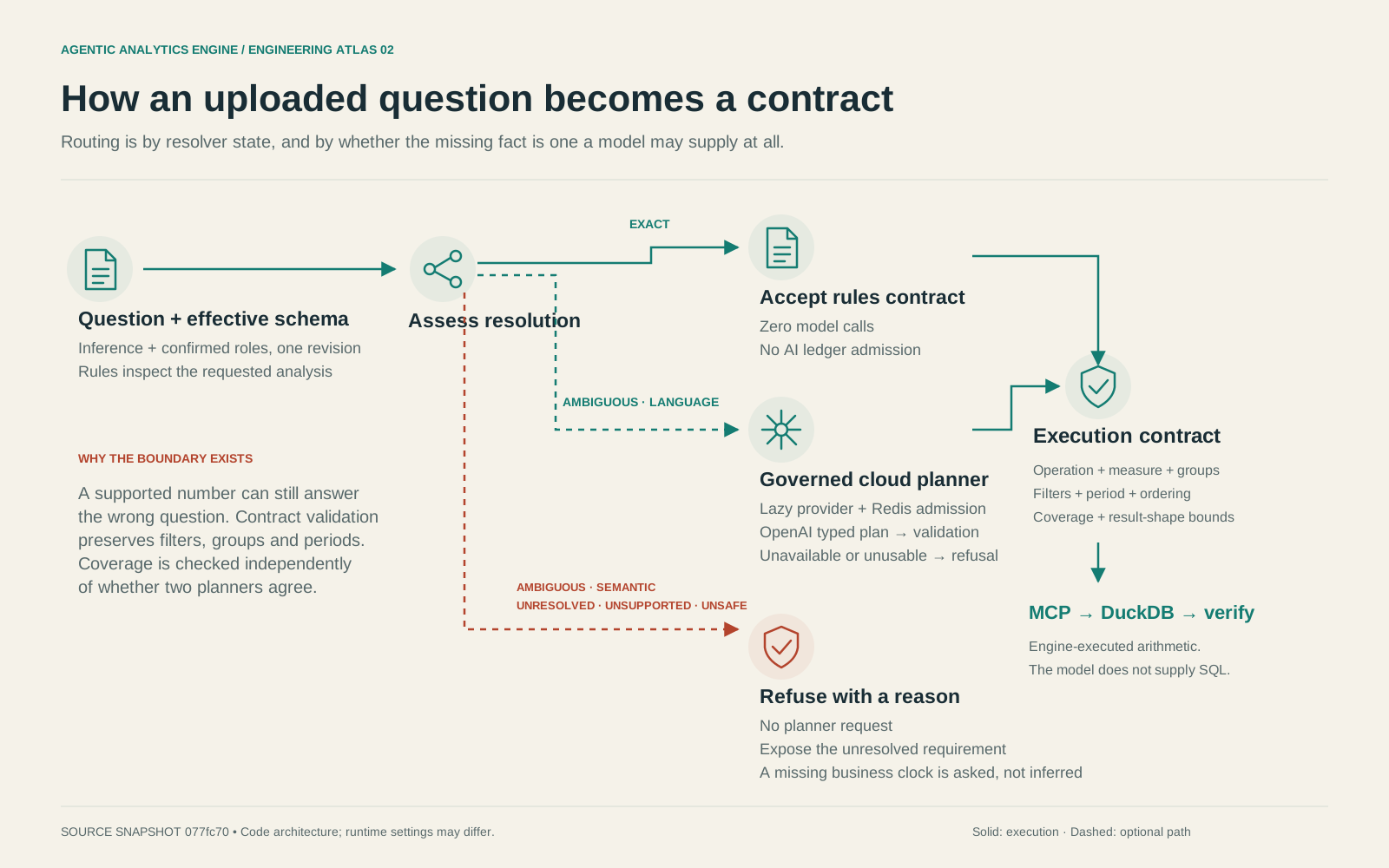
When the rule resolver returns AMBIGUOUS, the AI planner receives the question, the schema, and a list of allowed aggregate labels. It returns a planning proposal; the engine validates it locally against the schema and the semantic metric layer before proceeding. The planner cannot instruct the engine to execute arbitrary SQL or bypass verification.
Runtime and data layer
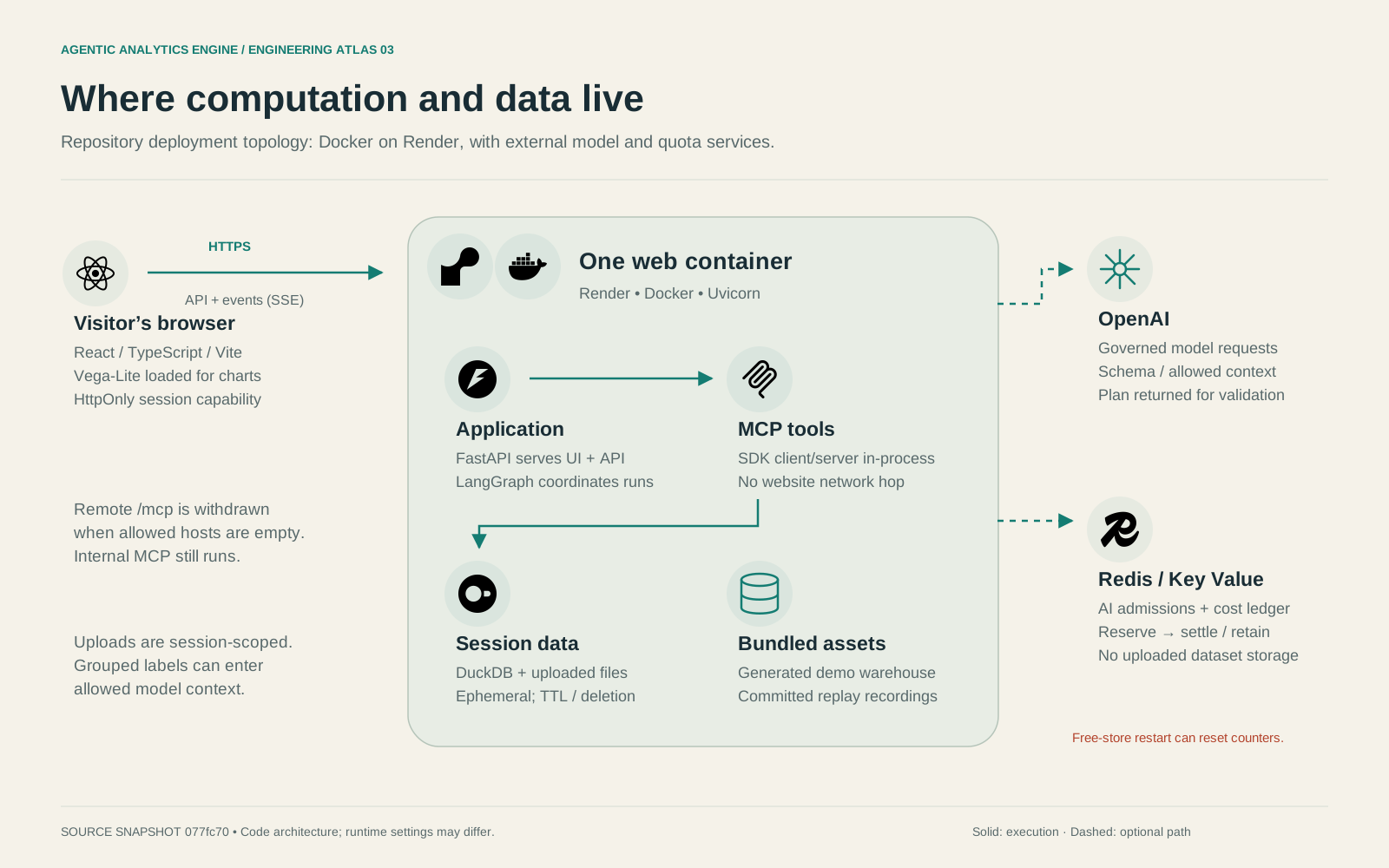
The runtime is a FastAPI backend with SSE streaming to a React + TypeScript + Vega-Lite frontend. The analytical workflow runs through LangGraph with a typed state machine. DuckDB executes all queries in read-only mode via an MCP boundary, with the website speaking MCP in-process and no network hop. For external callers, /mcp is a separately guarded Streamable HTTP transport that answers 503 when no host allow-list is configured.
Upload analytics
User-uploaded CSV and Parquet files are supported through a capability-based session. The cloud planner receives the question, schema information, and allowed aggregate labels, not unaggregated rows. Near-unique text columns are withheld from grouping. Structurally ambiguous numeric columns (a value between 18 and 65 could be age or a store number) trigger a session-scoped role confirmation.
Four audit modes
Governed Analysis (default): Rule resolver plus AI planner for eligible ambiguities.
Deterministic Analytics: Rule-based path only, no model cost.
AI Analytics: Cloud-assisted path inspection.
Side-by-side comparison: Compare two paths on the same question.
Verification and test results
Production audit run on 6 October 2026:
- 10 CI jobs passed, including Docker build and three browser engines (Chromium, Firefox, WebKit)
- 60 credential-free API acceptance checks passed
- 156 of 156 browser matrix cells passed, covering width, theme, and state cells with no upload, analysis, comparison, or provider request
- One separately authorized Compare canary passed 41 checks at $0.000158
The engine is designed so that correctness of published numbers does not depend on trusting the model; every number is verifiable from the cited cells and generated SQL in the response.
Stack
Frontend: React, TypeScript, Vite, Vega-Lite
API and streaming: FastAPI, SSE
Workflow: LangGraph, typed state machine
Calculation: DuckDB, SciPy (supported statistical tests)
Safety: AST-based SQL guard, read-only DuckDB, capability sessions
Deployment: Docker on Render